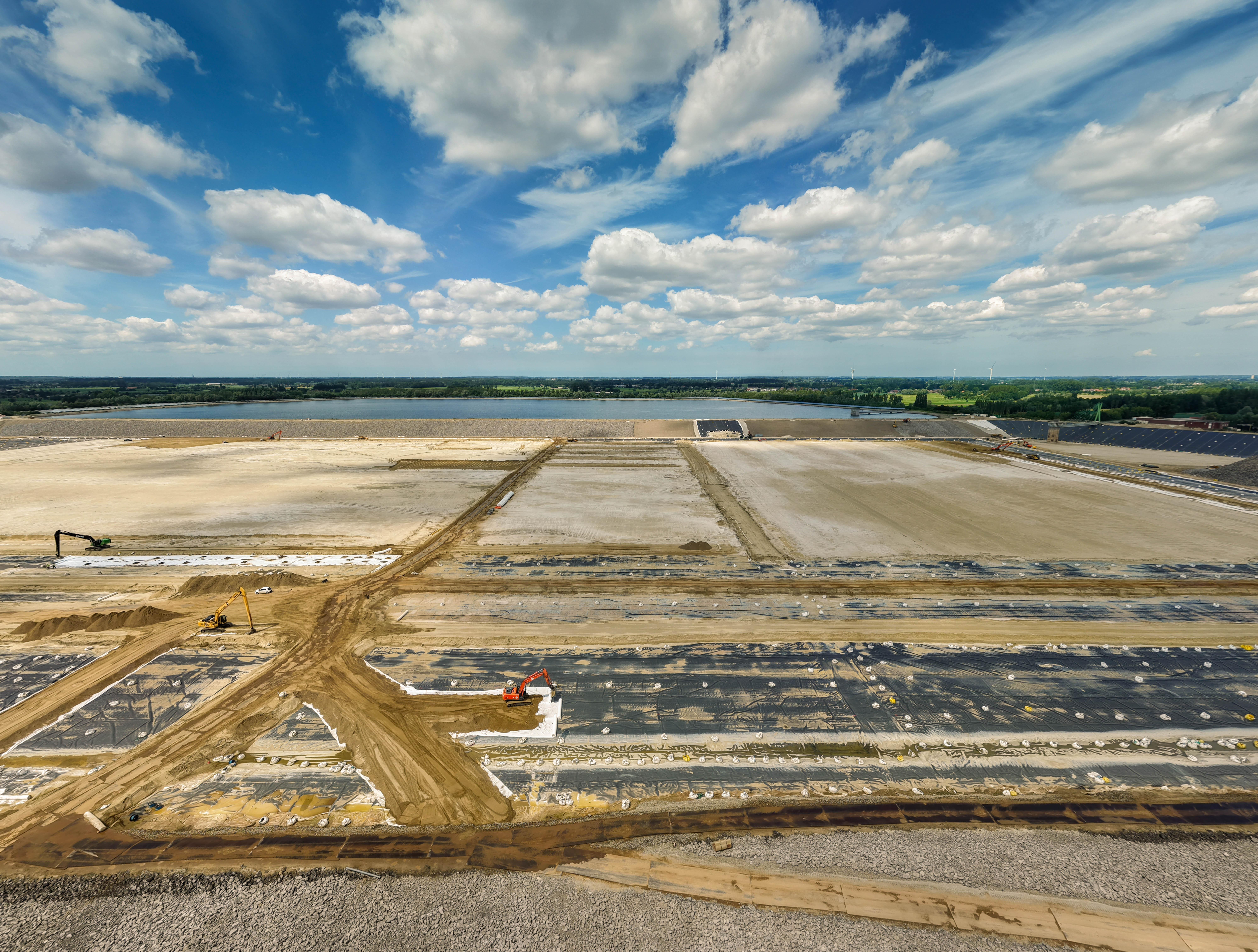
At the Kluizen water production centre near North Sea Port, Jan De Nul is renovating the oldest of two major drinking water reservoirs. This reservoir stores 6.4 billion litres of drinking water, over half the site's capacity. The renovations include replacing the foil, removing sludge, and installing 60 km of leak-detection cables, and reusing materials to minimise environmental impact.
The Kluizen drinking water reservoir is vital to East Flanders' drinking water supply. After 50 years, the oldest reservoir needed major refurbishment. The liner was at the end of its life, causing water losses, and phosphate-rich sediment caused algal blooms during warm periods, complicating water production. Extensive renovation work began in early 2024 for De Watergroep.
The early stages of the renovation involved removing fish from the reservoir, transferring water to a second reservoir, and the removal of sediment, sand, and the liner. A new, thicker bottom liner will now be installed, along with 60 km of leak-detection cables for precise leak identification during and after construction. Additionally, new aeration pipes are being added to keep water moving, prevent stratification, and maintain higher water quality.
To protect the reservoir embankments, multiple protective layers of stabilised sand, gravel, and rock armour are placed on top of the liner. These layers prevent erosion, wave damage, and weather effects. To reduce transport and maximise reuse, about 180,000 m³ of existing revetment material will be reused for these protective layers. Overall, 230,000 m³ of protective layers are being applied to the embankments.
Completion is expected by the end of 2026. Afterwards, the reservoir will be capable of storing excess winter water, creating a strategic reserve to help alleviate summer water shortages. All surrounding works are scheduled for completion by mid-2027.
Image: Jan De Nul