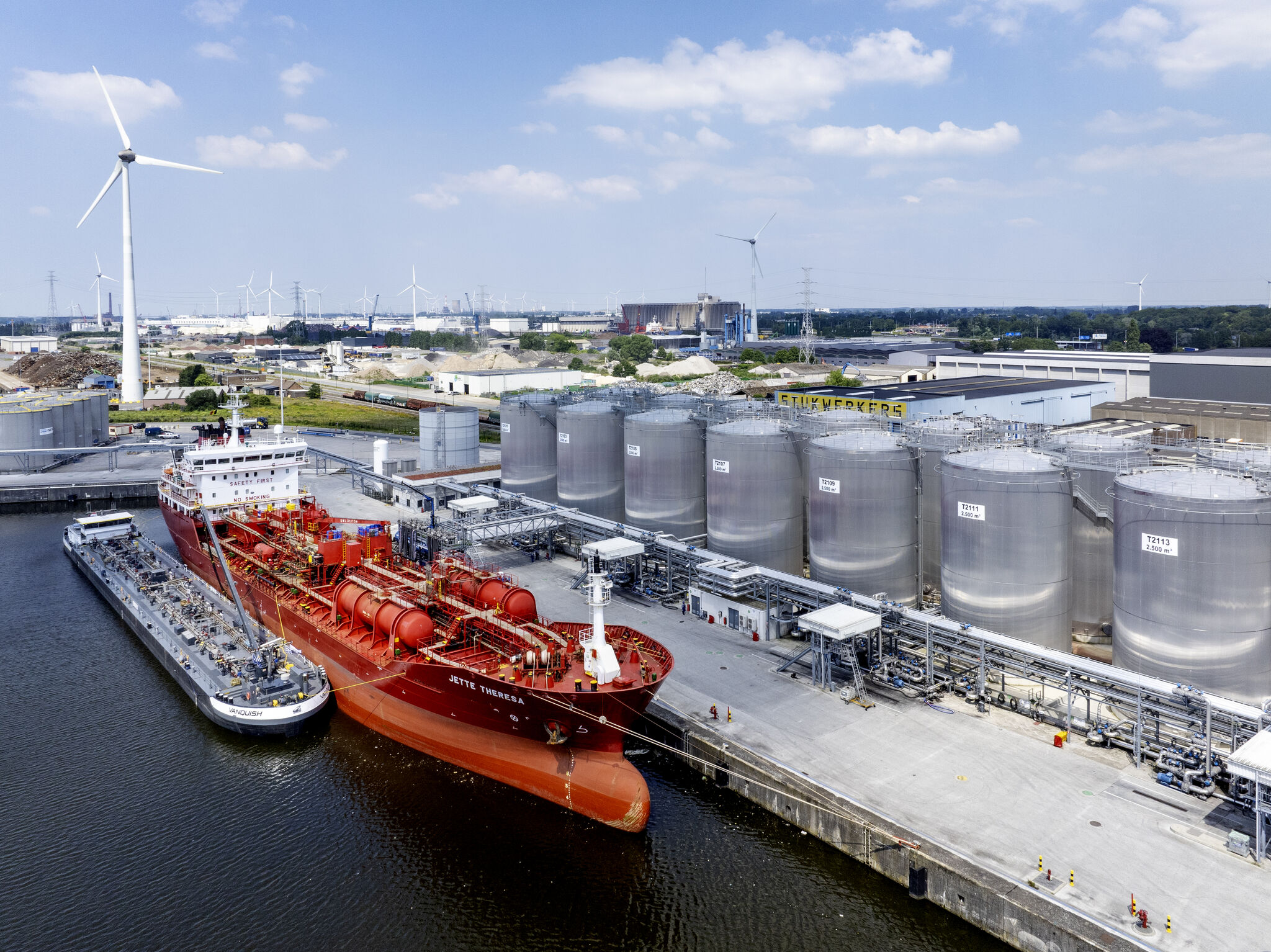
North Sea Port is making full preparations to enable the refuelling of alternative shipping fuels within the port area. An independent risk analysis shows that the port meets all requirements for safely and efficiently refuelling LNG, hydrogen, methanol, and ammonia in Vlissingen, Terneuzen, and Ghent. This marks an important step for North Sea Port as a leading European port for alternative fuels.
International shipping is increasingly shifting away from traditional fossil fuels, such as heavy fuel oil and diesel, towards more sustainable alternatives. To support this transition, North Sea Port commissioned an external risk assessment for all berths within the port area to identify where LNG, hydrogen, methanol, and ammonia can be bunkered. The study investigated truck-to-ship and ship-to-ship refuelling (also known as bunkering), for both maritime and inland shipping. Not only were nautical risks considered, but also surrounding infrastructure such as roads, wind turbines, high-voltage lines, and strictly regulated Seveso sites handling hazardous substances.
Cas König, CEO of North Sea Port: “The independent risk analysis showed that LNG, hydrogen, methanol and ammonia can be safely refuelled throughout the port area – in Vlissingen, Terneuzen and Ghent – with maximum consideration for safety and the surrounding area. Tanker vessels and tank trucks can safely supply these alternative fuels to maritime and inland shipping that use them as fuel.”
Strict requirements for safety and infrastructure
In this phase, the policy frameworks have been tested, safety requirements validated, and preparations for trial operations completed. This is an essential step that confirms the port is ready to bunk these fuels. The study examined, among other things, the expectations of companies to determine the necessary safety and infrastructure requirements for each fuel. Additionally, it looked at how audits and permits can be coordinated with other international ports, how policy measures align with operational practice, and under what conditions pilot projects can be carried out safely. Because these new fuels have a lower energy density and specific properties — such as higher flammability or toxicity — more bunkering operations will be needed than at present, and stricter safety and infrastructure requirements will apply. At the same time, the study shows that companies, authorities, and local residents want to know where each type of fuel can be refuelled. Therefore, the locations have been made visible on a special bunkering map covering the entire port area.
To ensure the safe handling of these fuels, controlled bunkering operations will soon be carried out. After each test, it will be evaluated together with the involved parties and emergency services, so that the tanking process can be further improved for safety and efficiency. This approach prepares the port for increased and more frequent bunkering operations with alternative fuels, while also strengthening market and community confidence.
North Sea Port as a European leader
The study supports various ambitions of North Sea Port. It contributes to the expansion of a future-proof port infrastructure, the strengthening of intermodal cooperation – including through sustainable transport routes or Green Corridors – and the greening of the nautical-logistical chain. By already preparing for the refuelling of all four alternative fuels across the entire port area, North Sea Port positions itself as a leader in the energy transition of European shipping.
International standards and collaboration with ports
The readiness of North Sea Port for each fuel was assessed based on the international standards of the International Association of Ports and Harbours (IAPH) and the Port Readiness Level instrument for maritime fuels. In cooperation with other Dutch and Belgian ports, North Sea Port thus contributes to the development of common bunker standards.
Image: North Sea Port