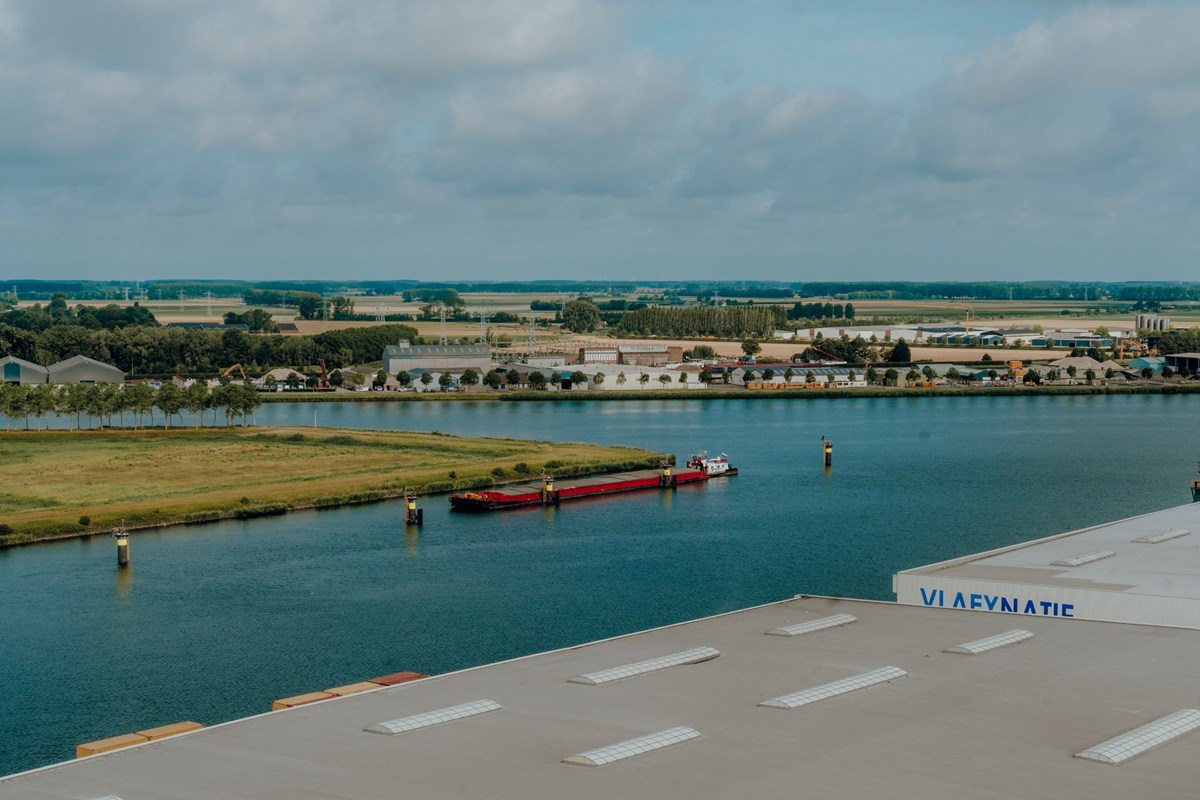
Working closely together, Vlaeynatie and Zeeland Sugar Terminal showcase how trimodal transport (by road, water and rail) can be successfully integrated into daily operations to reduce environmental impact and improve efficiency.
Many companies are taking meaningful steps toward more sustainable logistics. Among them are Vlaeynatie, which provides value-added services in the bulk supply chain, with a strong focus and commitment to fertilisers, and Zeeland Sugar Terminal, a modern sugar terminal with 130,000 tons of silo storage, packaging, and trimodal access for flexible imports and exports. Both companies are taking bold steps toward a more sustainable future. By focusing on trimodal transport (by road, water and rail), they're not only reducing their carbon footprint but also boosting the efficiency of their logistics operations.
Weekly container trains
A striking example is the weekly deployment of container trains between Vlaeynatie's 3MCT Container Terminal and MPET (MSC PSA European Terminal) in the Port of Antwerp-Bruges. With a capacity of 60TEU per one-way trip, this rail link offers a sustainable alternative to road transport and helps reduce congestion on Flemish highways and the Antwerp port area.
The railway also proved its worth during the recent sugar season at Zeeland Sugar Terminal. Multiple trains loaded with sugar from Germany successfully reached the terminal, demonstrating that rail is not only sustainable but also highly effective for transporting bulk goods traditionally moved by truck.
“A multimodal connection is not just a logistical advantage, it's a gateway to efficiency, flexibility, and seamless service for Vlaeynatie's and Zeeland Sugar Terminal's clients," said Tim Borteel, Commercial Director of Vlaeynatie
A broader sustainability strategy
The initiatives of Vlaeynatie and Zeeland Sugar Terminals reflect a wider shift within North Sea Port toward more sustainable and efficient logistics. Their approach demonstrates that efficiency and environmental awareness can coexist. An example, and a clear step forward in a sector where sustainability is no longer only optional.
A strong foundation
With a history dating back to 1845, Vlaeynatie has evolved into a trusted partner for dry bulk, with a strong focus on fertilisers and sugar. Operating in North Sea Port since 1909 and from Westdorpe since 2015, they continue to pursue their original core business: providing added value within the maritime and dry bulk supply chain.
In 2017, Zeeland Sugar Terminal was established in the port area as a modern sugar terminal. With 130,000 tons of storage capacity in silos, equipped with packaging lines, facilities for both container and silo truck loading, and warehousing capacity for import flows, its terminal is designed for flexibility and scale. In addition, a container depot (3MCT) is available at the terminal, which is fully trimodal - accessible by barge, rail and truck.
Thanks to a strategic rail connection, sugar is exported from Westdorpe by train to France, Germany, and Poland, amongst others. This multimodal approach makes Zeeland Sugar Terminal a strong, reliable partner for the Northern European sugar industry.
Image: North Sea Port